

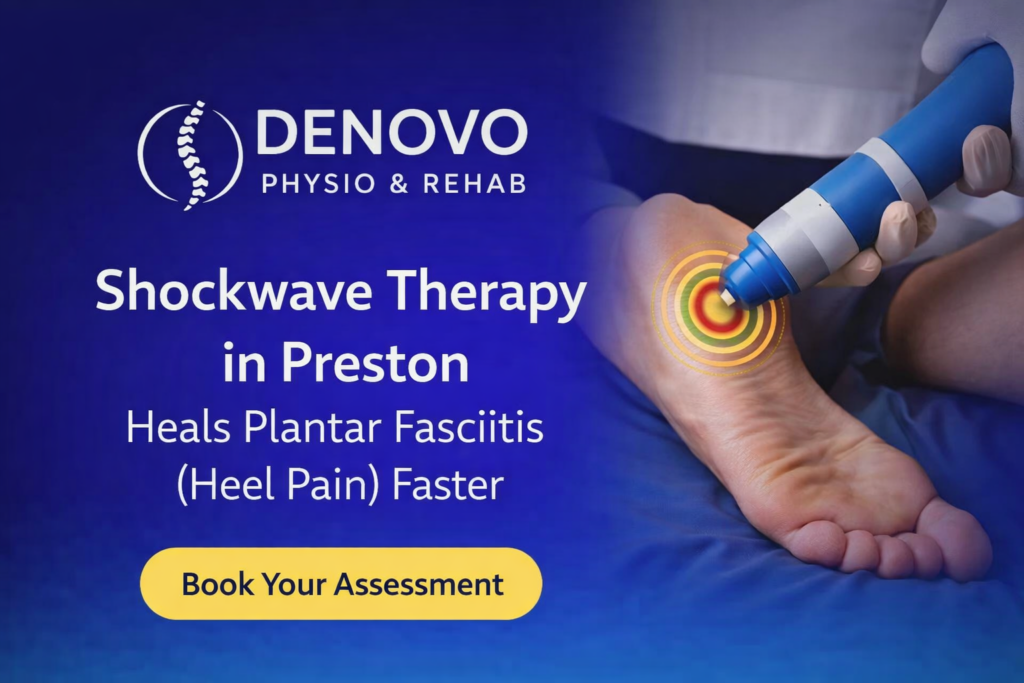
Plantar fasciitis is one of the most common causes of heel pain, affecting people of all ages — from runners and active individuals to those who spend long hours on their feet. The sharp, stabbing pain under the heel can make simple daily activities like walking, climbing stairs, or standing for long periods extremely uncomfortable. Fortunately, modern treatments such as Shockwave Therapy in Preston are helping patients recover faster without surgery or long-term medication.
At Denovo Physio & Rehab, shockwave therapy has become a highly effective, non-invasive solution for treating persistent plantar fasciitis and restoring pain-free movement.
What Is Plantar Fasciitis?
Plantar fasciitis occurs when the plantar fascia — a thick band of tissue running along the bottom of your foot from the heel to the toes — becomes inflamed or irritated. This tissue supports the arch of your foot and absorbs shock when you walk.
When overstressed, small tears can develop in the fascia, leading to:
- Sharp heel pain, especially in the morning
- Stiffness after periods of rest
- Pain after long walks or standing
- Tenderness under the heel
Without proper treatment, the condition can become chronic and take months, sometimes even years, to settle.
Why Traditional Treatments Sometimes Fall Short
Common treatments for plantar fasciitis include rest, stretching, orthotics, ice therapy, and anti-inflammatory medication. While these can help in the early stages, long-standing cases often do not respond fully.
This happens because the damaged tissue may have poor blood supply, meaning it struggles to heal naturally. That’s where Shockwave Therapy in Preston offers a major advantage.
What Is Shockwave Therapy?
Shockwave therapy is a non-surgical treatment that uses high-energy acoustic waves to stimulate healing in injured tissues. It is widely used in physiotherapy for chronic tendon and soft tissue conditions.
At Denovo Physio & Rehab, the treatment is delivered directly to the painful area of the heel using specialised equipment. Each session typically lasts around 10–15 minutes.
How Shockwave Therapy Speeds Up Healing
Shockwave therapy works differently from painkillers or passive treatments. Instead of just masking pain, it targets the root cause of the problem.
1. Stimulates Blood Flow
The acoustic waves increase circulation in the affected area. Better blood supply means more oxygen and nutrients reach the damaged tissue, helping it repair faster.
2. Promotes Tissue Regeneration
Shockwave therapy encourages the body to produce new collagen, which is essential for repairing the plantar fascia and strengthening the tissue.
3. Breaks Down Scar Tissue
Chronic plantar fasciitis can lead to the formation of scar tissue and calcifications. Shockwaves help break these down, improving flexibility and function.
4. Reduces Pain Sensitivity
The treatment influences nerve activity, reducing the sensitivity of pain receptors. Many patients notice pain relief after just a few sessions.
5. Triggers Natural Healing
Shockwave therapy essentially “restarts” the healing process in tissues that have stopped recovering on their own.
How Many Sessions Are Needed?
Most patients at Denovo Physio & Rehab require 3–6 sessions, spaced about a week apart. Improvement is often felt after the first or second treatment, with continued progress over the following weeks as the body repairs itself.
Is the Treatment Painful?
You may feel some discomfort during the session, especially over very tender areas, but it is usually well tolerated. The intensity can be adjusted, and sessions are short. Any soreness afterwards typically settles within 24–48 hours.
Benefits of Shockwave Therapy for Heel Pain
Choosing Shockwave Therapy in Preston offers several advantages:
- Non-invasive (no surgery required)
- No need for injections
- Minimal downtime
- Treats the underlying cause, not just symptoms
- Suitable for long-standing, stubborn cases
- Clinically proven success rates for plantar fasciitis
Many people who were considering surgery find they no longer need it after completing a course of shockwave therapy.
Who Is It Suitable For?
Shockwave therapy is ideal for people who:
- Have had heel pain for more than 3 months
- Have not improved with rest, exercises, or insoles
- Want to avoid injections or surgery
- Need to return to work or sport quickly
A full assessment at Denovo Physio & Rehab ensures the treatment is appropriate and safe for you.
What Else Supports Recovery?
Shockwave therapy works best when combined with physiotherapy. Your treatment plan may include:
- Stretching exercises for the calf and plantar fascia
- Strengthening exercises for foot and ankle muscles
- Advice on footwear
- Gait and posture assessment
- Load management guidance
This combination addresses both the injury and the underlying causes.
Why Choose Denovo Physio & Rehab?
At Denovo Physio & Rehab, patients receive personalised care from experienced physiotherapy professionals. Using advanced equipment and evidence-based techniques, the team focuses on long-term recovery, not temporary fixes.
If heel pain is limiting your daily life, early treatment can prevent the condition from becoming chronic.
Take the First Step Towards Pain-Free Walking
You do not have to live with persistent heel pain. Shockwave Therapy in Preston offers a fast, effective path to recovery for plantar fasciitis sufferers.
Book an assessment at Denovo Physio & Rehab today and start your journey back to comfortable, confident movement.
Frequently Asked Questions About Shockwave Therapy for Plantar Fasciitis
1. What is Shockwave Therapy used for?
Shockwave Therapy is commonly used to treat chronic musculoskeletal conditions, especially plantar fasciitis (heel pain), Achilles tendon pain, tennis elbow, shoulder pain, and other long-standing tendon injuries. It helps stimulate the body’s natural healing process.
2. How effective is shockwave therapy for plantar fasciitis?
Shockwave therapy has shown high success rates for long-term heel pain. Many patients experience significant pain reduction and improved mobility after a short course of treatment, particularly when combined with physiotherapy.
3. How quickly does shockwave therapy work?
Some patients feel relief after the first or second session, but most notice steady improvement over several weeks as the tissue heals. Full results often develop gradually after completing the treatment plan.
4. How many sessions will I need?
Typically, 3–6 sessions are recommended at Denovo Physio & Rehab, depending on the severity and duration of your condition.
5. Is shockwave therapy painful?
You may feel mild discomfort during treatment, especially over sensitive areas, but sessions are short and well tolerated. Any soreness afterwards usually settles within a day or two.
6. Is there any downtime after treatment?
No major downtime is required. Most patients return to normal daily activities immediately, although high-impact activities may be temporarily reduced based on your physiotherapist’s advice.
7. Is shockwave therapy better than injections or surgery?
Shockwave therapy is a non-invasive option that addresses the root cause of the problem and is often tried before injections or surgery. Many people avoid surgical procedures after successful treatment.
8. Who should not have shockwave therapy?
It may not be suitable for people who are pregnant, have certain circulation disorders, nerve issues, or infections in the treatment area. A full assessment at Denovo Physio & Rehab ensures safety.
9. Can I combine shockwave therapy with physiotherapy exercises?
Yes — combining shockwave therapy with stretching and strengthening exercises provides the best outcomes for plantar fasciitis recovery.
10. Where can I get Shockwave Therapy?
You can receive professional Shockwave Therapy at Denovo Physio & Rehab, where personalised treatment plans are designed to help you recover faster and return to pain-free movement.