Does This Sound Like You?
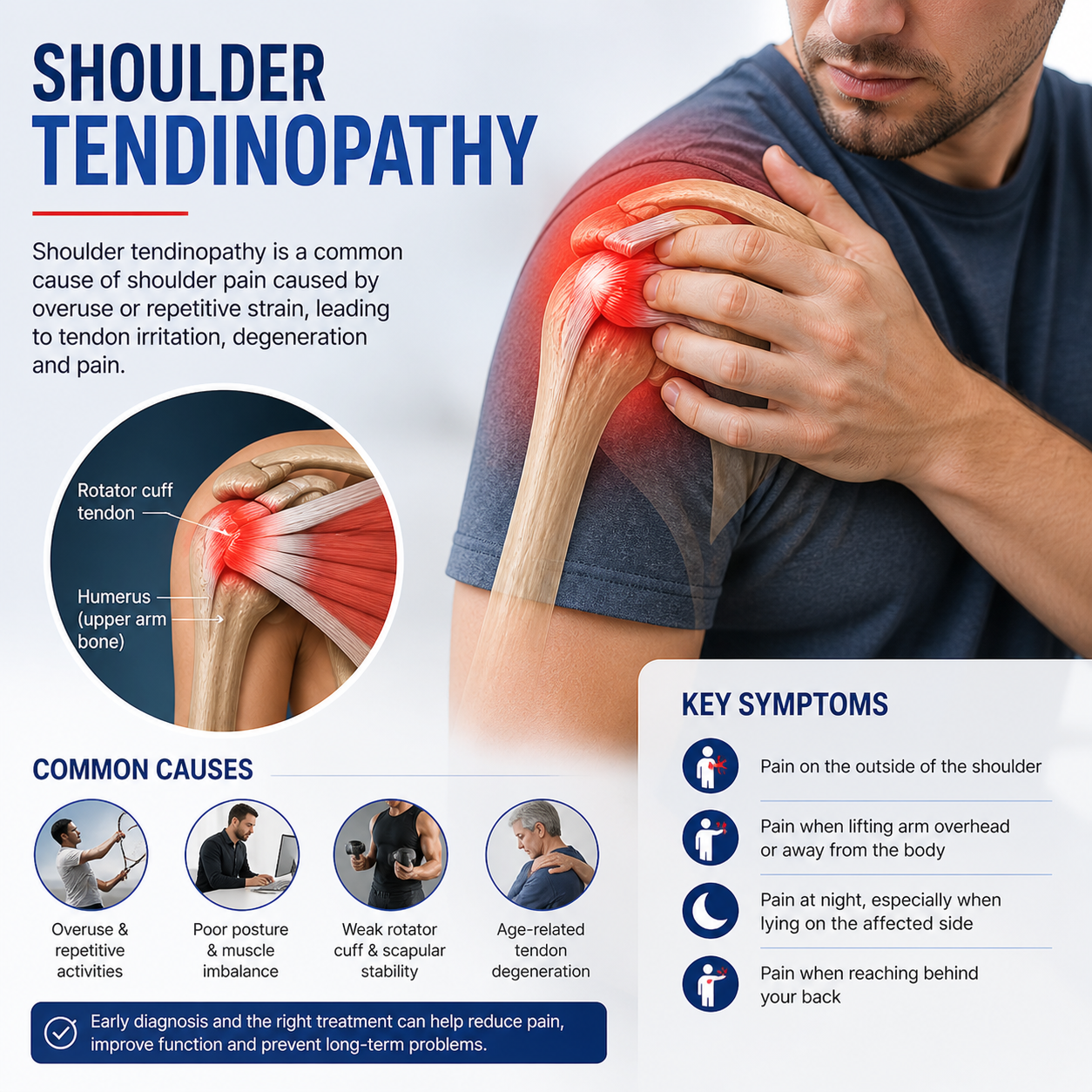
A deep aching pain in the shoulder that is worse at night, especially when lying on the affected side. Pain when reaching overhead, behind your back, or lifting anything away from your body. You have been given exercises by your GP or another physio but the shoulder has not improved — or improved briefly and then relapsed.
Shoulder tendinopathy — including rotator cuff tendinopathy and calcific tendinopathy — is one of the most complex and frequently under-treated musculoskeletal conditions. Getting the diagnosis right and the loading programme precise makes the difference between ongoing pain and full recovery.
Understanding Shoulder Tendinopathy
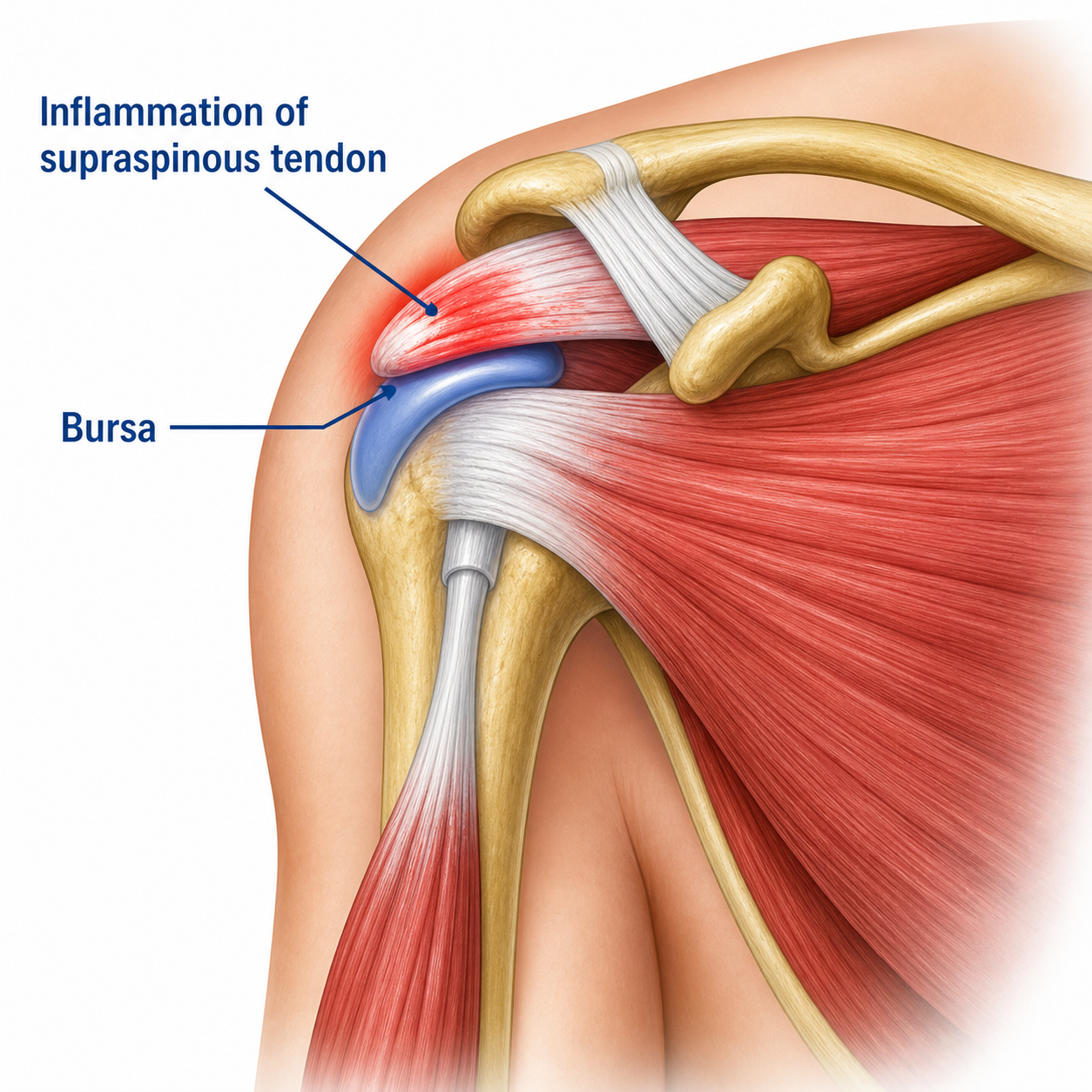
The rotator cuff is a group of four muscles and their tendons that stabilise the shoulder joint and allow it to move through its full range. When one or more of these tendons become overloaded or sensitised, the result is tendinopathy — a condition characterised by pain, stiffness, and reduced tolerance to load.
Calcific tendinopathy is a specific subtype where calcium deposits form within the tendon — most commonly the supraspinatus. These deposits can cause significant acute pain during the resorptive phase and chronic pain when longstanding. Shockwave therapy has a particularly strong evidence base for calcific shoulder tendinopathy.
Why Many Shoulder Problems Do Not Resolve Without Expert Help
The shoulder's complexity means generic exercises frequently fail. A rotator cuff tendinopathy programme needs to be specific to the affected tendon, progressed at the right rate, and combined with assessment of the contributing factors — thoracic spine mobility, scapular control, and shoulder blade mechanics. Without this, patients plateau.
NICE guidelines and the best available clinical evidence support structured physiotherapy-led rehabilitation as the primary treatment for shoulder tendinopathy. Corticosteroid injections provide short-term relief but are associated with higher recurrence rates and do not address the underlying tendon problem.
How Denovo Assesses and Treats Shoulder Tendinopathy
Your assessment includes a full clinical examination covering shoulder mobility, strength, rotator cuff load testing, and assessment of the cervical spine and thoracic spine as contributing factors. We identify precisely which structure is affected before designing your programme.
- Accurate clinical diagnosis — identifying the specific tendon and stage of tendinopathy
- Phase 1: Isometric exercises to reduce pain and begin tendon stimulation
- Phase 2: Progressive rotator cuff and scapular strengthening
- Phase 3: Overhead and sport/task-specific loading
- Thoracic spine and scapular mechanics — addressing the root cause of tendon overload
- Sleep position and daily activity advice for pain management during the early phase
- Clear milestones and return-to-activity plan
Shockwave Therapy for Shoulder Tendinopathy
Shockwave therapy has some of its strongest clinical evidence in the shoulder — particularly for calcific tendinopathy. Focused shockwave energy breaks down calcium deposits, stimulates blood vessel formation, and promotes tendon healing.
For rotator cuff tendinopathy without calcification, shockwave is used as an adjunct to rehabilitation in chronic or resistant cases.
Frequently Asked Questions
Calcific tendinopathy is confirmed by imaging — typically ultrasound or X-ray.
A typical course is 3–5 sessions with ongoing review.
No. You can self-refer directly.
Ready to Get Started?
Initial Assessment + First Treatment Session — £50
Your first appointment includes a full specialist assessment and your first treatment session.
No GP referral needed. Insurance recognised. Call 01772 288065 or book online.
Book Your Appointment