Does This Sound Like You?
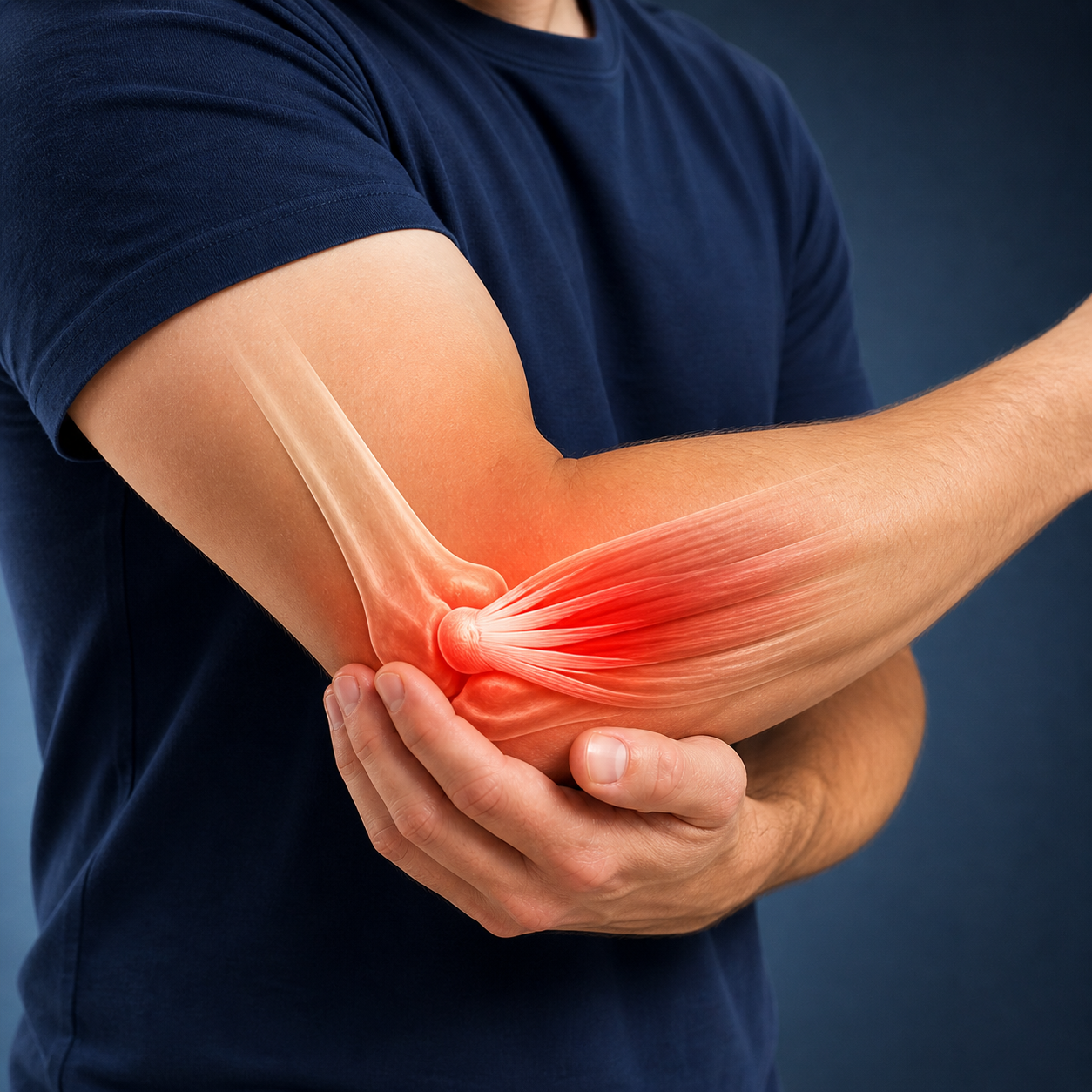
Pain on the outside of your elbow when gripping, lifting, or turning your wrist. A burning ache that lingers hours after activity. You have rested it for weeks — maybe months — and it still comes back the moment you return to normal activity. You have been told it will go away on its own, but it has not.
Tennis elbow — properly called lateral epicondylalgia — is one of the most mismanaged tendon problems in primary care. The wrong advice keeps patients stuck. The right structured rehabilitation gets them better.
What Is Tennis Elbow?
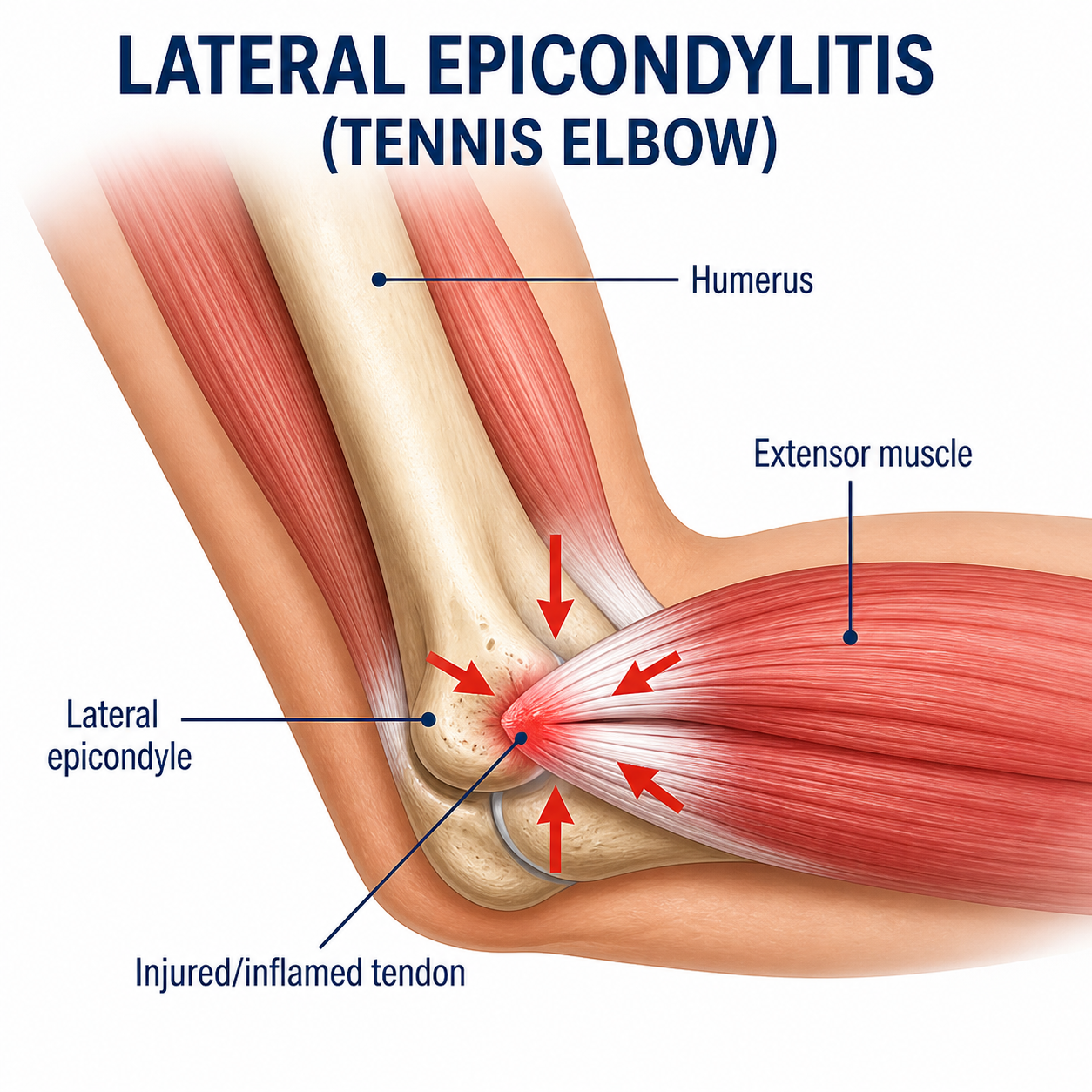
Tennis elbow is a tendinopathy of the extensor tendons that attach to the lateral epicondyle — the bony point on the outside of the elbow. The tendons become sensitised and structurally altered through repetitive loading or sudden overuse. It affects tennis players, but far more commonly affects tradespeople, office workers, gardeners, and anyone who performs repetitive gripping or wrist extension tasks.
Research consistently shows that the primary driver of ongoing pain is a failure of tendon adaptation — the tendon has been unable to keep up with the demands placed on it. Rest alone does not restore this capacity. Loading does.
Why Does It Become Chronic?
Most cases of tennis elbow that drag on for months share the same pattern: periods of rest followed by a return to normal activity too quickly, no structured progressive loading programme, and treatment focused only on pain relief rather than restoring tendon capacity.
Corticosteroid injections provide short-term relief but are associated with higher rates of recurrence at 12 months compared to physiotherapy. The NICE clinical evidence base supports physiotherapy-led rehabilitation as the most effective long-term approach.
How Denovo Assesses and Treats Tennis Elbow
Your initial assessment at Denovo Physio & Rehab begins with a thorough clinical examination to confirm the diagnosis and rule out any cervical spine or neural involvement — referred pain from the neck can mimic tennis elbow exactly and is commonly missed.
We assess grip strength, load tolerance, and the specific tasks driving your symptoms. From this we build a rehabilitation programme tailored to you — not a generic protocol.
- Phase 1: Isometric loading to reduce pain and begin tendon stimulation without aggravation
- Phase 2: Progressive isotonic loading to rebuild tendon strength and capacity
- Phase 3: Sport or task-specific loading to return you to what matters
- Wrist and forearm mechanics assessment — addressing the movement patterns keeping you stuck
- Ergonomic and activity modification advice for the early phase
- Clear return-to-activity milestones so you know exactly where you are in recovery
Shockwave Therapy for Tennis Elbow
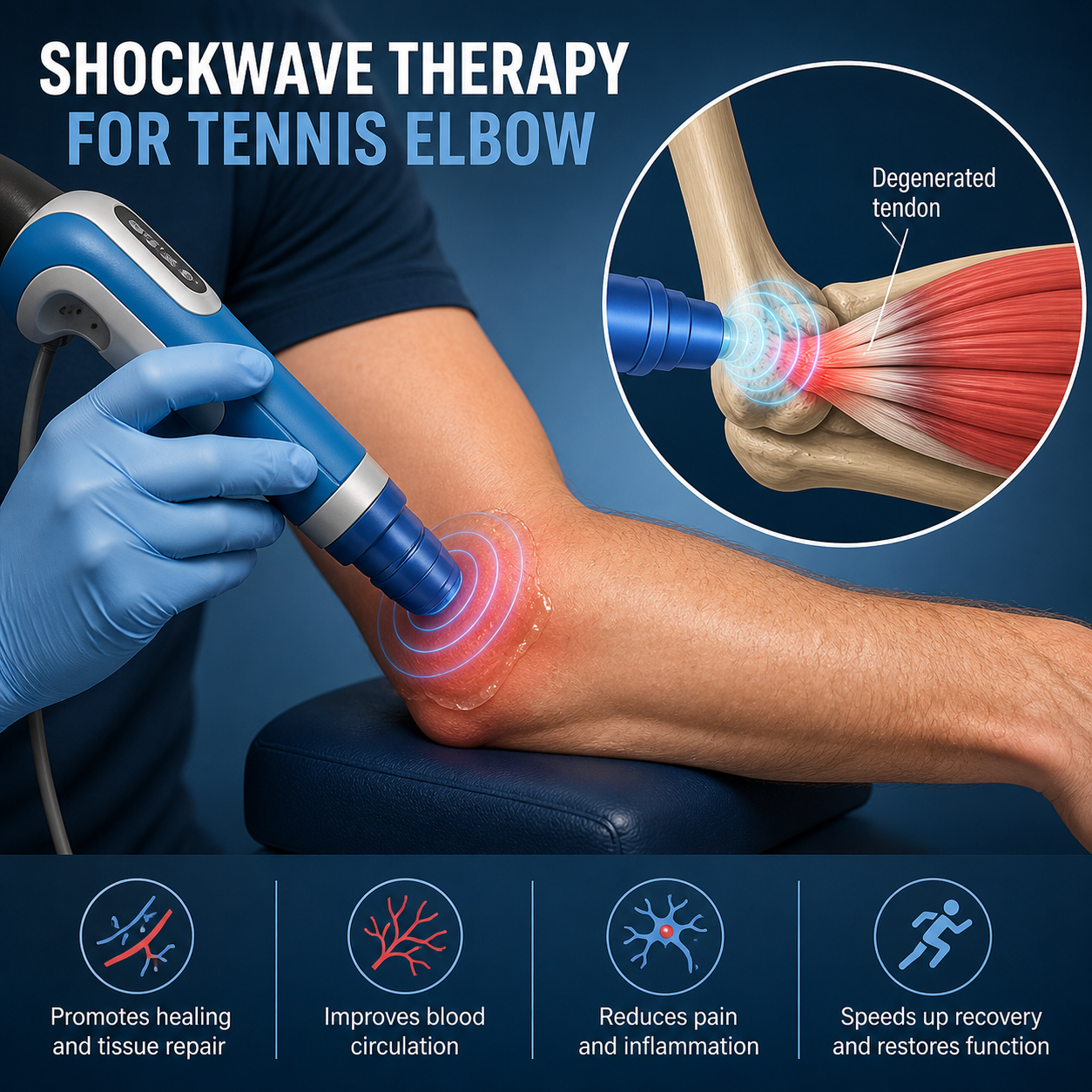
For patients with persistent or chronic tennis elbow — particularly where symptoms have lasted longer than 3 months — Extracorporeal Shockwave Therapy (ESWT) is a clinically evidenced treatment option.
Shockwave delivers focused acoustic energy directly to the affected tendon. It stimulates neovascularisation and collagen synthesis, breaks down calcific deposits where present, and desensitises the local nerve endings that are driving pain. A typical course is 3–5 sessions delivered weekly or fortnightly, combined with your rehabilitation programme.
Denovo Physio & Rehab is one of the few clinics in Preston offering specialist shockwave therapy from a qualified MSK physiotherapist with specific shockwave certification.
Frequently Asked Questions
With structured rehabilitation, most patients see significant improvement within 8–12 weeks. Chronic cases treated with shockwave alongside rehabilitation typically complete their course within 10–14 weeks. The length of time you have had symptoms affects recovery time — earlier treatment produces faster results.
No. You can self-refer directly to Denovo Physio & Rehab. We are recognised by Vitality, AXA, WPA, and Aviva health insurance. We also support Westfield Health, Medicash, Health Shield, and other cash plan providers.
In most cases yes — with appropriate load modification. Part of your programme includes clear guidance on what you can and cannot do at each phase of rehabilitation. Complete rest is rarely recommended.
Shockwave therapy can cause mild discomfort during the treatment, which is normal and expected. Most patients describe it as tolerable. Discomfort typically settles within 24 hours after each session.
Ready to Get Started?
Initial Assessment + First Treatment Session — £50
No GP referral needed. Insurance recognised. Call 01772 288065 or book online.
Book Online