Chronic pain can be frustrating, exhausting, and limiting. Whether it affects your ability to walk comfortably, play sports, or get through the working day, long-standing musculoskeletal pain often requires more than rest or painkillers. One increasingly popular and evidence-based treatment option is shockwave therapy.
But what exactly is shockwave therapy, and how does it relieve pain? In this guide, we explain how it works, what conditions it treats, and what you can expect from treatment.
What Is Shockwave Therapy?
Shockwave therapy, also known as Extracorporeal Shockwave Therapy (ESWT), is a non-invasive treatment that uses high-energy acoustic waves to stimulate healing in damaged tissues.
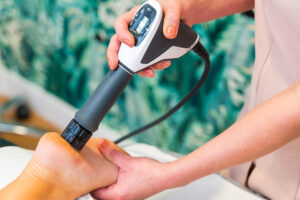
Despite the name, it does not involve electrical shocks. Instead, controlled sound waves are delivered to the injured area through a handheld device placed on the skin. These waves penetrate deep into tissues, triggering the body’s natural repair processes.
At Denovo Physio & Rehab, shockwave therapy is used as part of a comprehensive rehabilitation programme to treat chronic tendon, muscle and joint conditions.
How Does Shockwave Therapy Relieve Pain?
Shockwave therapy works through several scientifically supported mechanisms:
1. Stimulates Blood Flow
Chronic injuries often have poor circulation. Shockwave therapy increases blood supply to the affected area, bringing oxygen and nutrients necessary for tissue repair.
2. Encourages Tissue Regeneration
Acoustic waves stimulate collagen production, which is essential for healing tendons and ligaments.
3. Breaks Down Calcifications
In certain conditions, calcium deposits form in tendons. Shockwave therapy can help break down these deposits, reducing stiffness and discomfort.
4. Reduces Pain Signals
Shockwave therapy affects pain receptors, reducing sensitivity and interrupting the pain cycle.
5. Activates the Body’s Natural Healing Response
It essentially “restarts” the healing process in tissues that have become stuck in a chronic inflammatory phase.
What Conditions Can Shockwave Therapy Treat?
Shockwave therapy is particularly effective for chronic conditions that have not improved with rest or standard physiotherapy alone.
Common conditions treated include:
- Plantar fasciitis
- Tennis elbow (lateral epicondylitis)
- Achilles tendonitis
- Patellar tendonitis (jumper’s knee)
- Shoulder calcific tendonitis
- Hip pain related to tendon irritation
- Chronic muscle tightness
- Early-stage tendon degeneration
It is especially beneficial for conditions lasting longer than three months.
What Happens During a Shockwave Session?
A typical session at Denovo Physio & Rehab involves:
- Assessment of the painful area
- Application of gel to improve sound wave transmission
- Delivery of acoustic pulses using a handheld device
- Short treatment time (usually 5–10 minutes per area)
Most patients require 3–6 sessions spaced one week apart, depending on the severity and duration of symptoms.
Is Shockwave Therapy Painful?
Some patients describe mild discomfort during treatment, particularly in sensitive areas. However, sessions are short, and intensity can be adjusted to remain tolerable. Any temporary soreness usually settles within 24–48 hours.
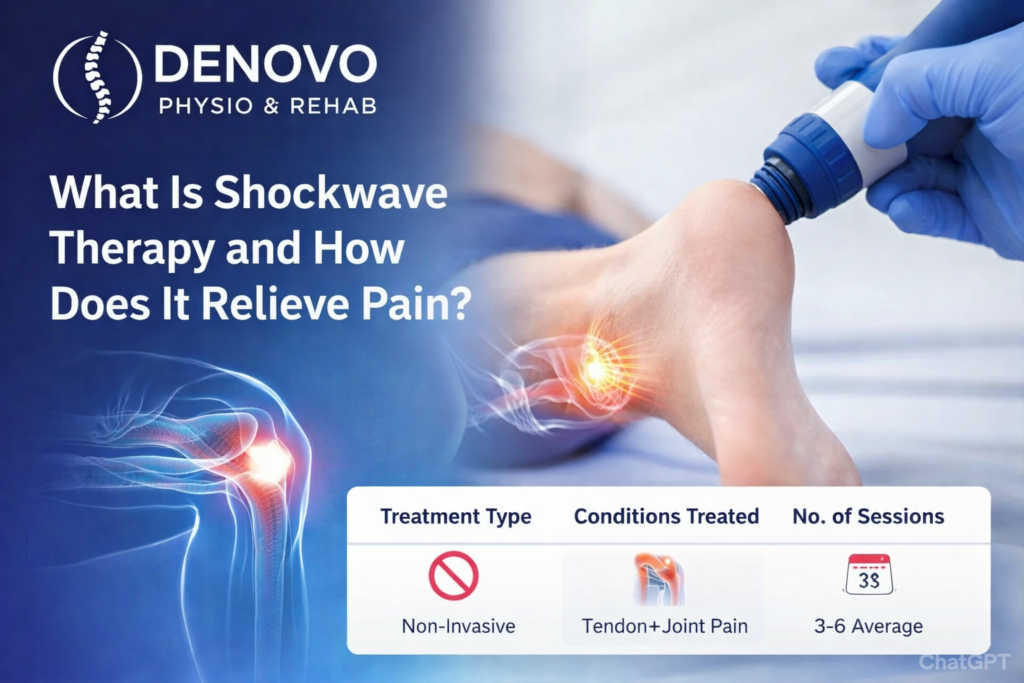
Shockwave Therapy Overview Chart
Feature Details
Treatment Type: Non-invasive acoustic wave therapy
Session Duration 5–10 minutes per area
Number of Sessions : 3–6 sessions (average)
Best For Chronic tendon and joint pain
Downtime Minimal – return to daily activity
Success Rate High for chronic tendon conditions
Surgery Required No
Benefits of Shockwave Therapy
- Non-surgical treatment option
- No injections required
- Minimal downtime
- Fast treatment sessions
- Clinically supported results
- Can reduce the need for long-term medication
It is particularly appealing to individuals seeking a safe alternative to steroid injections or surgery.
Who Is Shockwave Therapy Suitable For?
Shockwave therapy is ideal for patients who:
- Have chronic pain lasting more than 3 months
- Have not responded to rest or basic physiotherapy
- Want to avoid injections or surgery
- Are medically suitable for non-invasive therapy
However, it may not be recommended for individuals who are pregnant, have certain circulatory disorders, or have active infections in the treatment area. A professional assessment is essential before starting treatment.
How Long Does It Take to See Results?
Many patients begin to notice improvement after 2–3 sessions. Full results often develop gradually over 6–12 weeks as the body’s healing process continues.
Consistency with recommended exercises alongside shockwave therapy significantly improves outcomes.
Frequently Asked Questions (FAQs)
1. Is shockwave therapy safe?
Yes, when performed by trained professionals, it is considered safe and supported by clinical evidence.
2. Are there side effects?
Mild redness, swelling or temporary soreness may occur but usually settles quickly.
3. How many sessions will I need?
Most patients require 3–6 sessions, depending on the condition.
4. Can I exercise after treatment?
Light activity is usually allowed, but high-impact exercise may need to be temporarily reduced.
5. Is shockwave therapy better than injections?
It depends on the condition. Shockwave therapy aims to stimulate natural healing rather than temporarily reducing inflammation.
6. Does it work for arthritis?
It can help manage pain related to tendon irritation around arthritic joints, but it does not reverse joint degeneration.
7. Is it covered by insurance?
Coverage depends on your provider. It is best to check with your insurer directly.
Final Thoughts
Shockwave therapy is a modern, evidence-based treatment that supports the body’s natural healing process. By stimulating blood flow, promoting tissue repair, and reducing pain signals, it offers a powerful non-surgical option for chronic musculoskeletal conditions.
At Denovo Physio & Rehab, shockwave therapy is delivered as part of a personalised rehabilitation plan tailored to your specific needs. If you have been struggling with long-standing tendon or joint pain, seeking early professional assessment can help you return to comfortable movement and everyday activities more quickly and confidently.